
In this article
The short answer
Work backward from the receiving window in the current show manual for your specific event, not from the day the doors open. Behind that date sit four separate stages that each need their own time: artwork approval, production, transit, and material handling inside the venue.
Those stages are genuinely different, so give each one its own date rather than treating them as one lead time. Approval is a decision on your side. Production begins after the final proof is approved and any required payment is complete, as the BoothBright production and shipping policy states. Transit is a carrier's time. Material handling is the venue's or the general contractor's process for moving freight from the dock to your space.
Build the timeline backward
Open the show manual for the exact event and edition you are attending, and find the receiving dates and the correct address there. Event services contractors publish their own exhibitor checklists and freight explainers, and they are worth reading alongside the manual; two of Freeman's are linked at the end of this article. The important point is that these details are event specific, so dates, contractors, and rules published for one show do not transfer to another.
With the receiving window in hand, write the stages down in reverse order. Do not guess durations from another event or from an average found online. Get the transit estimate from the carrier for the actual origin, destination, service level, and packed dimensions, and get the production estimate from your confirmed BoothBright quote for the exact configuration and quantity. BoothBright's policy is explicit that shipping is calculated once packed dimensions, destination, service level, and order value are known, and that arrival dates are estimates unless agreed otherwise in writing.
- Receiving window and address confirmed in the current show manual for your event.
- Required arrival date, chosen inside that window rather than on its last day.
- Ship date, set by the carrier's estimate for your actual shipment.
- Production completion date, from your confirmed quote.
- Final proof approval and required payment, which is when production can begin.
- Artwork submission and revision time, which is the part teams underestimate most.
Business address, advance warehouse, or show site
There is rarely one right destination, and the choice affects labels, deadlines, and who handles your crates. Confirm which options your event actually offers, and the exact addresses, in the current show manual, because the warehouse address is often not the venue address.
| Destination | What it means | Watch out for |
|---|---|---|
| Your business or office | Goods arrive before the trip and your team inspects and repacks | Someone must be there to receive, inspect, and store it safely |
| Advance warehouse | Freight is received before the show and moved to your space by the contractor | Earlier deadline, and the address differs from the venue address |
| Direct to show site | Freight arrives at the venue during a specific receiving window | Narrow window, and nobody may accept it early |
Whatever you choose, record the name of the receiving party, the exact address including hall or dock references, the permitted arrival window, and a phone number for a human being who can be reached during that window.
Packed dimensions, weights, and labels
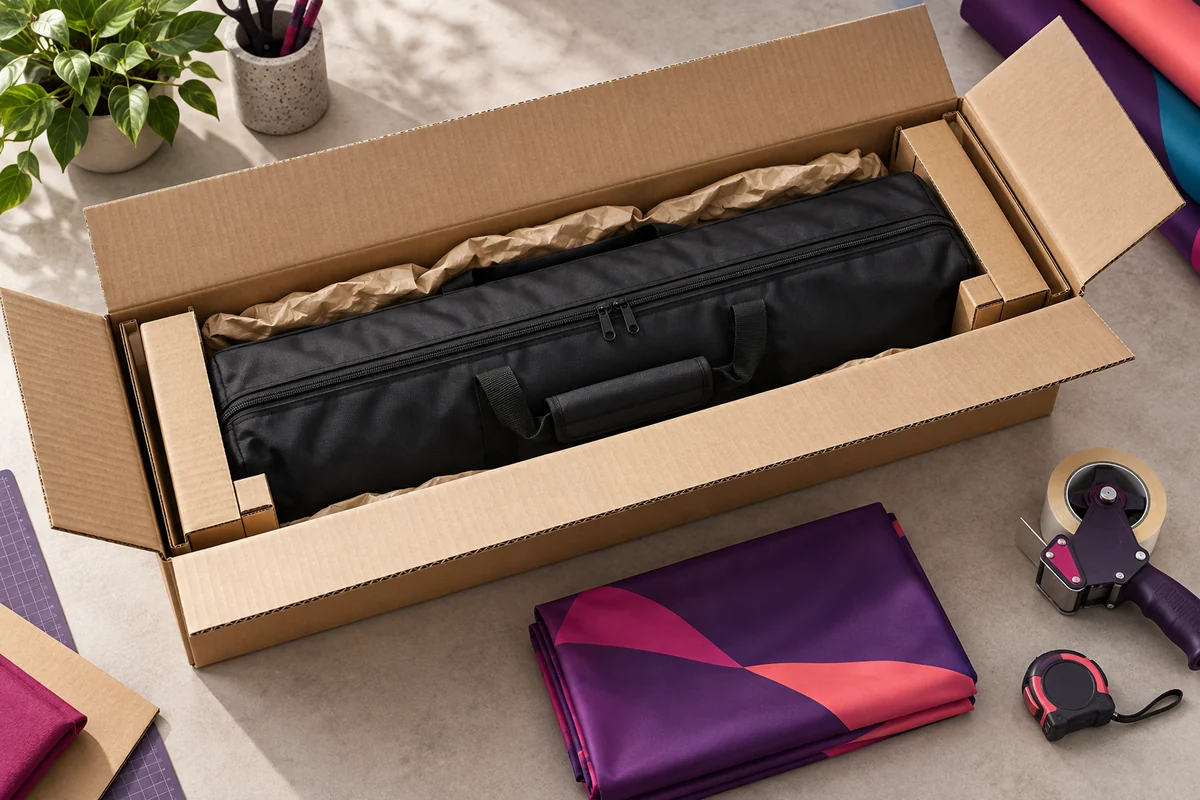
Every quote and every carrier conversation depends on packed reality rather than product names. Weigh and measure each packed piece as it will actually travel, including the bag, case, or carton, and keep that list where the whole team can see it. It becomes the basis for freight quotes, for material handling paperwork, and for checking that everything came home.
Label every package, on the outside, with the exhibiting company name, the booth number, the show name, and the destination from the show manual. Put a duplicate copy of the same information inside each package. If a label is torn off in transit, an internal copy is often the only way a package finds its booth.
A blank planner you can copy
Keep one row per event for the season. Filling it in is the fastest way to see that two events with similar opening dates can have very different shipping deadlines.
| Event and dates | Receiving address and type | Permitted arrival window | Packed pieces, weight, dimensions | Setup day, team, tools | Outbound contact and next destination |
|---|---|---|---|---|---|
Invented to show why receiving windows differ. This scenario assumes two separate display kits, one dedicated to each event, so neither shipment waits on the other. No transit times, rates, or event rules are implied for any real show.
- Event A, kit 1
- Opens on a Tuesday; the manual offers only direct to show site receiving in a narrow window on the Monday
- Event B, kit 2
- Opens the following Thursday; the manual offers advance warehouse receiving that closes well before show week
- Consequence
- Event B's shipping deadline lands earlier than Event A's, even though it opens later
- Plan
- Ship kit 2 for Event B first, then kit 1 for Event A as the later, tighter delivery, and confirm both windows in each manual
- If only one kit exists
- The schedule has to allow teardown, packing, transit, and the second event's receiving window after the first event closes; if it does not, change the delivery plan or use a second kit
- Still to confirm
- Actual dates, addresses, contractors, and material handling process for each specific event
Inventory, inspection, and the return trip
Pack from a written inventory rather than memory, and photograph each packed case once so the same arrangement can be rebuilt at the end of the show. Include the unglamorous items: tools, spare fasteners, cable ties, tape, wipes, and printed setup instructions. Then rehearse one full setup before the display travels, which is the advice in BoothBright's trade show planning guide.
BoothBright's shipping policy asks customers to inspect cartons before signing for freight, note visible damage with the carrier, photograph damaged cartons before opening them, and keep packaging while a claim is reviewed. Arrange for whoever actually accepts the delivery to do that inspection and to record visible damage at the moment it is accepted. If an event contractor or advance warehouse receives the freight on your behalf, confirm how it records and reports damage, and then inspect and photograph every carton promptly when the shipment reaches your booth, before anything is unpacked.
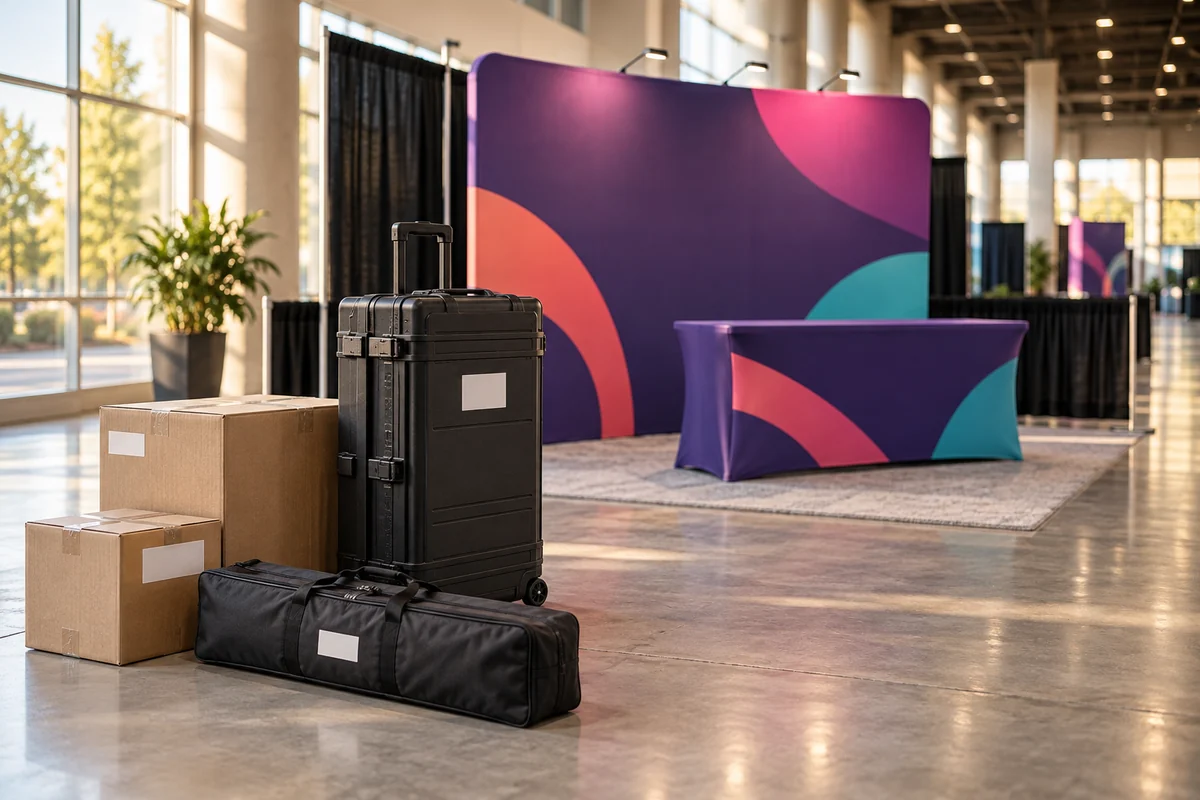
Plan the outbound move before the show closes. Know who completes the outbound paperwork, where labels for the return or next destination come from, and who is authorized to release your freight. Then close the loop: repack to the inventory, note anything damaged or missing while the show is still fresh, and order replacement parts or graphics early rather than the week before the next event.
- Current show manual downloaded for this exact event and edition.
- Receiving type, address, and arrival window recorded, with a phone contact.
- Artwork submitted with time for revisions before the approval deadline.
- Final proof approved and required payment complete so production can begin.
- Production estimate confirmed on the quote for the exact configuration.
- Freight quoted from real packed dimensions, weights, destination, and service level.
- Every package labeled outside and inside with company, booth, show, and destination.
- Tracking numbers and receiving confirmations saved where the whole team can see them.
- Written inventory and packing photos for every case.
- One complete practice setup done before travel.
- Whoever accepts the delivery briefed to inspect cartons and record visible damage before signing.
- Outbound paperwork, labels, and release responsibility assigned before the show closes.
- Post event repack, damage notes, and replacement orders placed early.
Common questions
How long does shipping take?
There is no single answer, and BoothBright does not publish universal transit times. Shipping is quoted once packed dimensions, destination, service level, and order value are known, and arrival dates are estimates unless agreed otherwise in writing.
When does production start?
After the final proof is approved and any required payment is complete, which is why artwork review deserves real calendar time in the schedule.
Advance warehouse or direct to show site?
Whichever your show manual offers and your timeline supports. Advance warehouse deadlines fall earlier but reduce show week risk; direct to site keeps the shipment later inside a narrow window.
What should I do if a carton arrives damaged?
Have whoever accepts the delivery note the damage with the carrier before signing, photograph the carton before it is opened, keep all packaging, and contact BoothBright with your order reference and photos so the claim can be reviewed.
Planning a season of events?
For pricing and configuration help ask the sales team, and for an order already in production use the order help route so it reaches the right people.
References
- Freeman, Get trade show ready: a first-time exhibitor checklist ↗ — Contractor checklist covering pre-show preparation, at-show testing, and teardown ownership
- Freeman, Understanding the process of freight (PDF) ↗ — Explains the difference between shipping and material handling inside a venue
- BoothBright production and shipping policy — Production timing, freight calculation, tracking, and inspection