
In this article
The short answer
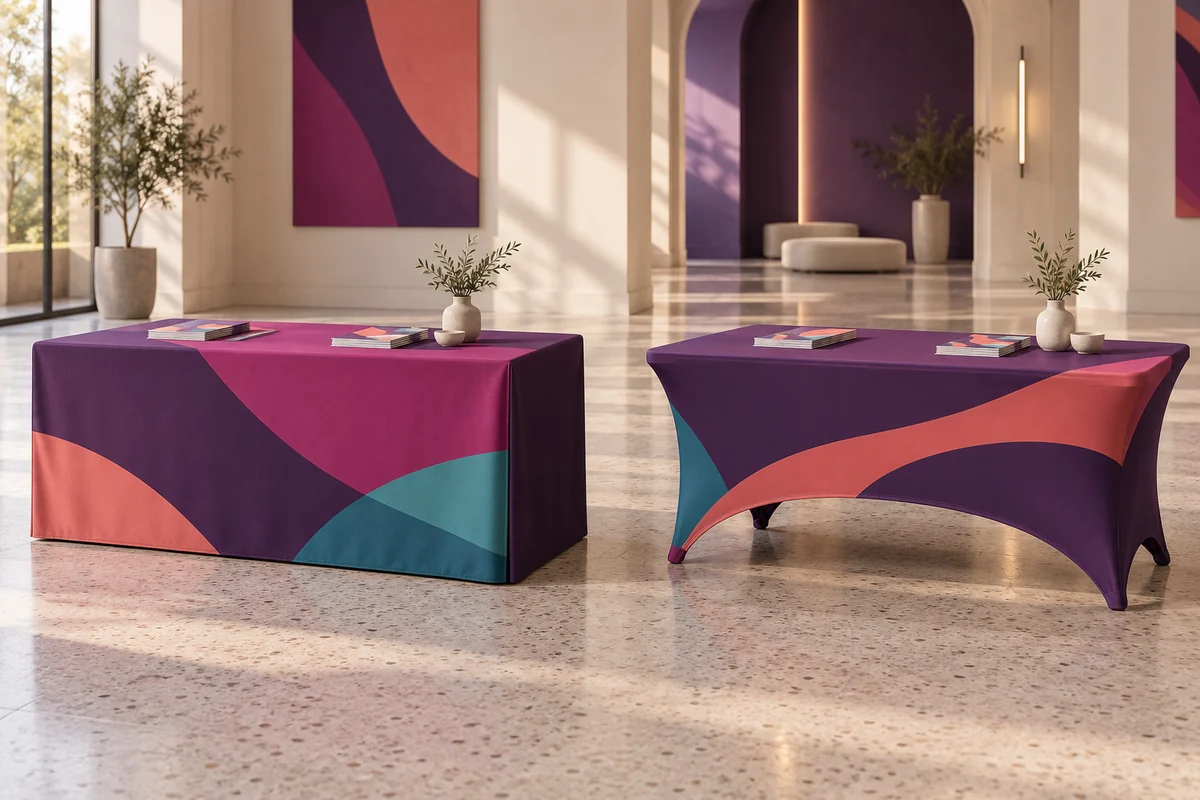
Choose a fitted cover when you want a classic tailored box shape with straight corners and a flat printed front, and when supplies will be stored under the table. Choose a stretch cover when you want a modern sculpted look that hugs the table and shows almost no loose fabric.
Both start from the same requirement: the actual measured length, width, and height of your table. BoothBright offers 4 ft, 6 ft, and 8 ft sizes in fitted closed back, fitted open back, and stretch styles, so the size you order should follow a tape measure rather than the label on the table.
Measure the table, not the name of the table
A nominal size is a shopping label, not a guarantee of fit. Two tables both described as six foot can differ in height, top thickness, edge profile, and how far the legs are set in from the corners. A cover cut for one can look slack or strained on the other, and that difference is very visible in photographs of your booth.
Take three measurements with a tape: the length of the top, the depth of the top, and the height from the floor to the top surface. Then look at the legs. Folding legs that sit flush and fold inward suit either style. Legs with a wide brace, a shelf, or a frame that projects beyond the top edge can interfere with the tight lower profile of a stretch cover.
These numbers are invented to show how to record measurements. They are not a BoothBright specification and not a standard for any table you own.
- Top length
- 72 in measured edge to edge
- Top depth
- 30 in measured front to back
- Height to top surface
- 29 in from the floor
- Leg inset
- About 3 in from each end, folding inward
- Notes for the quote
- Storage crates go under the table; front face must stay clean for the logo
Send those five lines with your order or quote request. Everything after that becomes a conversation about intent rather than guesswork, and it is the single most effective way to avoid a fit surprise.
How the two silhouettes behave in use
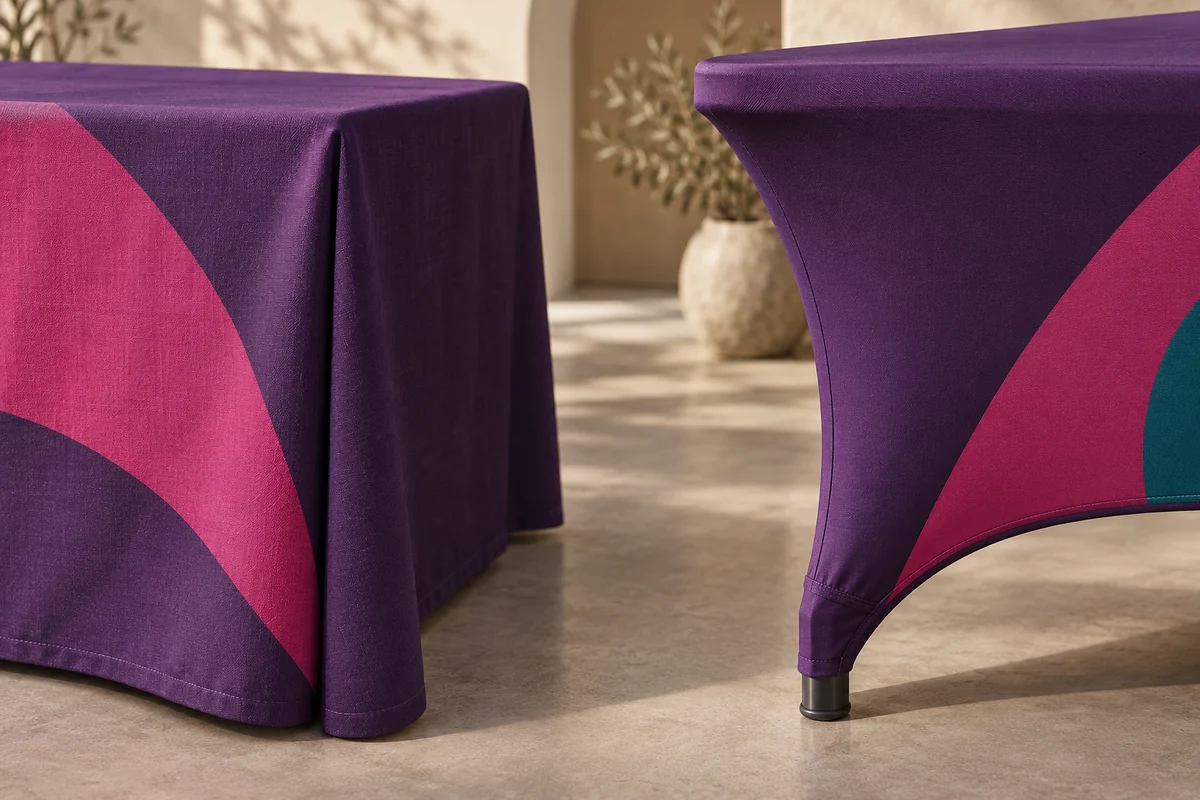
A fitted cover is sewn to the shape of the table, so it drapes to the floor with defined corners and a flat front panel. Because the panel is flat and hangs straight, artwork stays close to the shape it had on screen, which makes fitted covers the friendlier choice for detailed logos, ordered layouts, and text.
A stretch cover is cut smaller than the table and held under tension, drawing in around the legs to create a sculpted profile. It looks contemporary and stays tidy through a long day because there is little loose fabric to catch. The trade off is that tension distorts artwork slightly, most noticeably near corners and legs, so simple bold shapes and generous margins hold up better than fine detail near an edge.
| What you care about | Fitted | Stretch |
|---|---|---|
| Overall look | Tailored, square, traditional | Sculpted, tight, contemporary |
| Artwork behavior | Flat front panel, minimal distortion | Slight distortion under tension, especially at corners |
| Detail and small text | More forgiving | Keep detail away from edges and legs |
| Access underneath | Choose the open back style | Confirm the access opening for the selected stretch cover |
| Fabric on the floor | Drapes to the floor | Stays drawn in around the legs |
| Setup speed | Lift and drop over the table | Pull over the corners and tension |
| Packing | Folds; follow the supplied care instructions | Packs small; tension helps it look flat |
Open back, closed back, and how your team works
Closed back covers wrap all four sides, which looks complete when a table stands in the open or is viewed from behind. Open back covers leave the rear panel out so your team can reach boxes, samples, chargers, and personal bags without lifting fabric. BoothBright lists fitted closed back and fitted open back as separate style choices, so this is a decision you make at order time rather than a modification later.
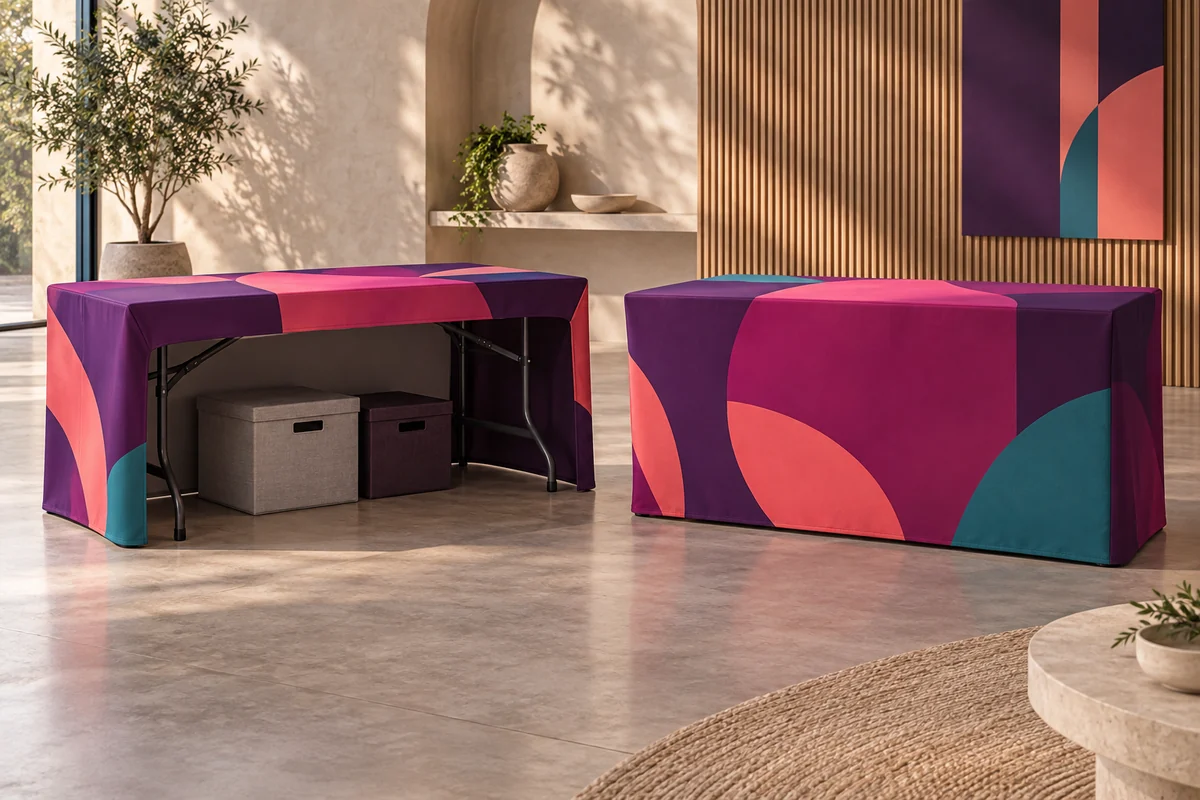
- Registration or check in with supplies underneath: open back keeps a long shift workable.
- A table on an island or a stage seen from all sides: closed back keeps every view finished.
- One cover used for both situations: choose based on the events you attend most, and keep the front graphic strong either way.
Put the logo where visitors actually look
The visible front face, above the point where the table edge falls away, is the part people read from the aisle. Anything placed low sits below eye level, gets blocked by chairs and bags, and disappears in photographs. Keep the brand name and one short message in the upper band of the front panel, and let color carry the lower area.
- Measured length, depth, and height are recorded on the order, not assumed.
- The selected size and style match those measurements and your leg layout.
- Open or closed back matches how the team will work behind the table.
- Logo and message sit in the upper visible band of the front face.
- Detail and small text are kept clear of corners, edges, and leg positions.
- Brand colors are identified for print rather than judged on a monitor.
- You know which items are included, such as a protective bag, from the product page.
- Care instructions come from the paperwork supplied with the product you ordered.
Common questions
Will a cover described as six foot fit any six foot table?
Not reliably. Height, top thickness, and leg inset vary between tables, and those differences change how a cover sits. Measure your table and provide the measurements with your order.
Which style photographs better?
Both photograph well when the front graphic is clean. Fitted covers keep artwork closest to the file, while stretch covers give a tighter modern silhouette with slightly more distortion near corners.
Can one cover work for a 6 ft and an 8 ft table?
No. Order the cover for the table you will actually use. If your team uses both, the practical answer is a cover for each size rather than a compromise that fits neither.
Send your table measurements and we will confirm the fit
Include length, depth, height, and a note about the legs, and BoothBright can confirm the right size and style before anything goes to print.